
Functionality in Dew Claws
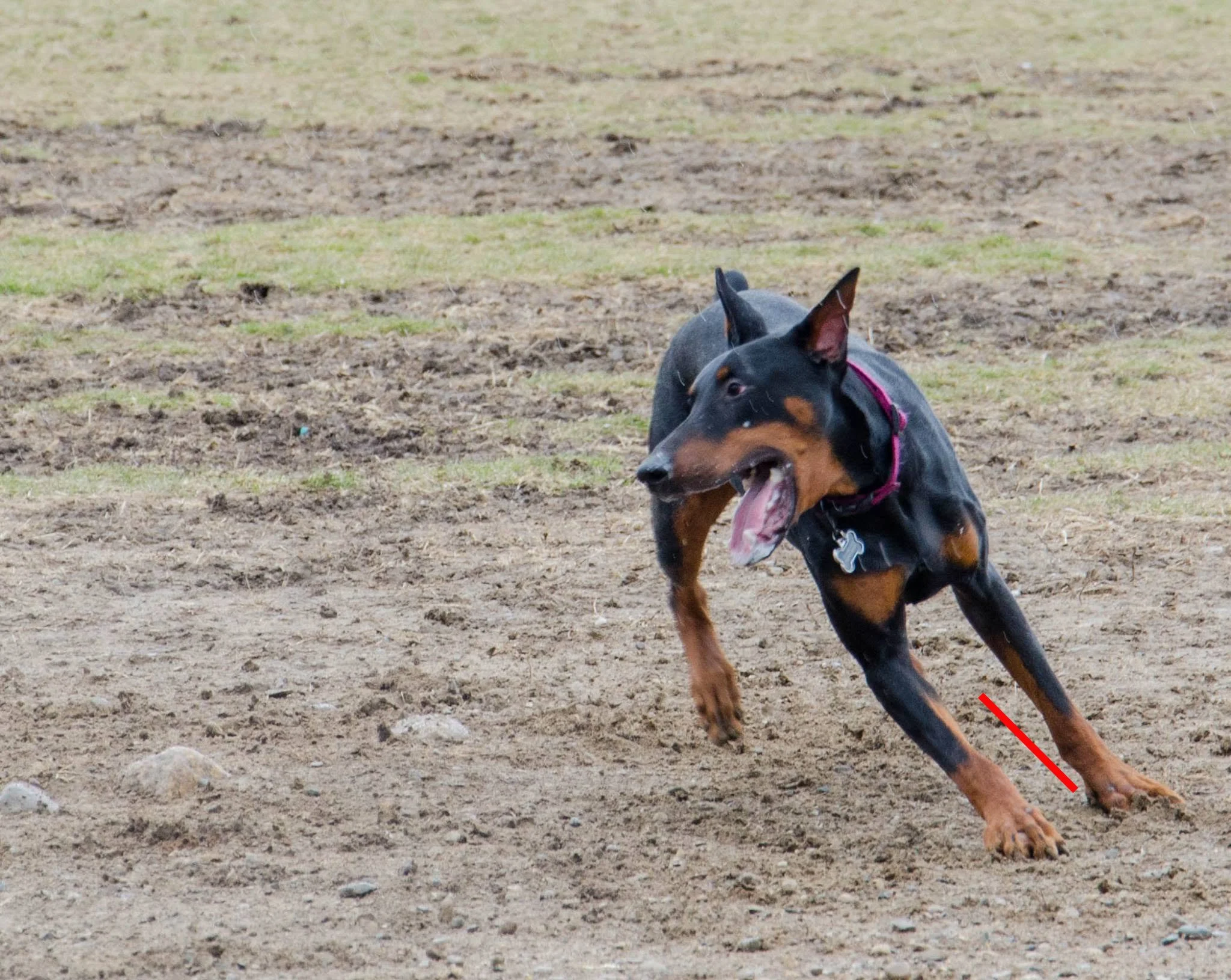
Benchmark’s Dark Waters “Douglas”, utilizing his dewclaw to quickly turn in a muddy field in pursuit of the flirt pole.
At Warsong Dobermann, we choose not to remove front dewclaws on our puppies. While this decision can be controversial in the conformation ring, we retain them because they are highly functional digits that benefit the health and performance of our dogs.
Anatomy and Evolution
All dogs are born with this first digit on the thoracic limb. Although many breeders remove them at three days old to reduce the risk of injuries or to create the appearance of straighter legs in the show ring, very few breed standards actually require their removal.
Anatomical examination confirms that front dewclaws are fully functional digits attached to four distinct muscles and tendons that allow individual movement. These structures are not vestigial; they are documented in anatomical guides, such as Miller and Evan's Guide to the Anatomy of the Dog, as being integral to the limb. Additionally, evolutionary evidence shows that nearly all wild carnivores retain their front dewclaws for survival and movement.
Function in Motion
While the dewclaw does not touch the ground when a dog is standing, it makes contact during high-speed maneuvers such as cantering, galloping, or jumping. This allows the digit to:
Grip the ground to provide extra traction.
Stabilize the leg and reduce torque on the carpus and proximal limb during sharp turns.
Act as "ice picks" to help a dog grip and pull itself out if it accidentally falls through ice.
Performance and Long-Term Health
The presence of these digits is a significant factor in a dog's structural longevity. By stabilizing the carpal joint during activity, dewclaws may help prevent the chronic wear and tear that leads to arthritis. Because of these benefits, many working and performance dog trainers and veterinary experts recommend against amputation to ensure the dog can function as a complete athlete.
Zink C, Schlehr MR. Working Dog Structure: Evaluation and Relationship to Function. Front Vet Sci. 2020 Oct 20;7:559055. doi: 10.3389/fvets.2020.559055. PMID: 33195533; PMCID: PMC7606876.
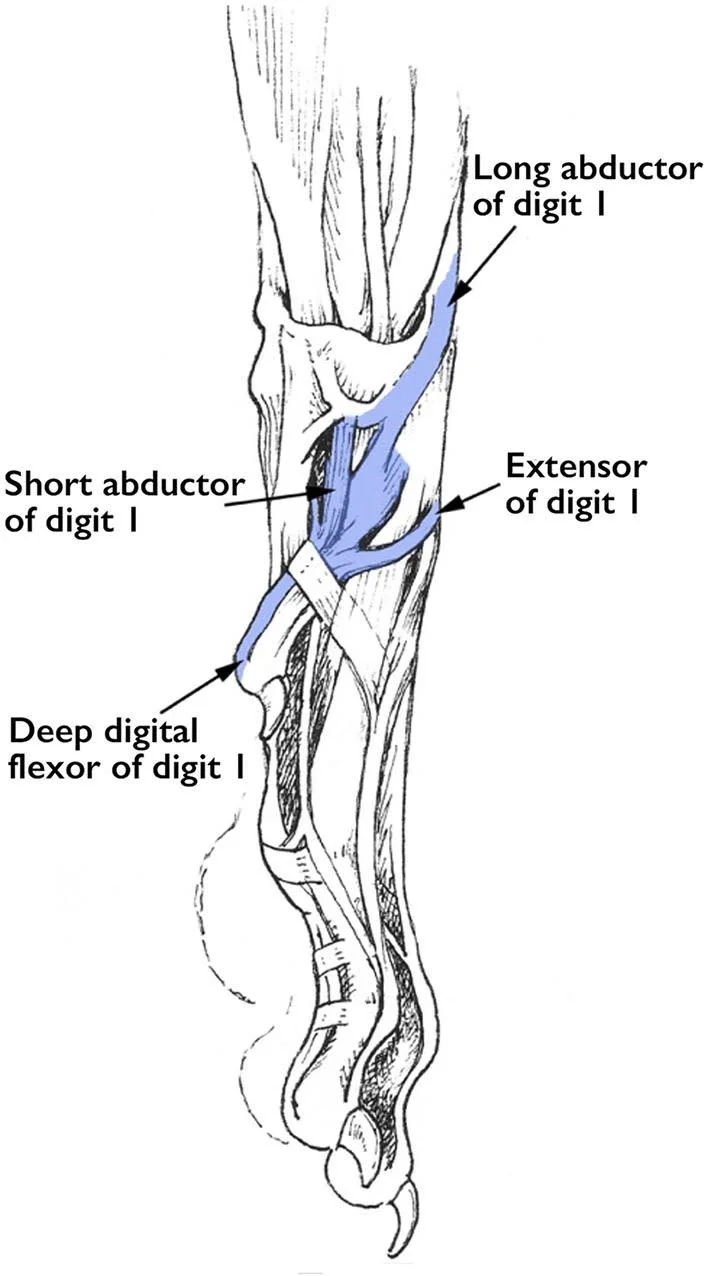
Tendons that attach to the thoracic limb dew claw. Illustration by M. Schlehr (from Miller and Evan's Guide to the Anatomy of the Dog).